
Key Takeaways
- On-Demand Generation: Electricity is generated in real-time. The energy lighting your bulb didn’t exist a few seconds ago.
- Flow, Not Storage: At grid scale, electricity is a moving current that must be used as it’s produced, rather than a resource kept in a tank.
- The Balancing Act: The power grid constantly adjusts its supply to match consumer demand every second of the day.
- Why Outages Are Instant: Because there is no “reserve supply” sitting in your house, the lights go out the moment the flow from the grid is interrupted.
Quick answer: The electricity lighting your room was generated seconds ago — not stored somewhere waiting for you. At large scale, electricity mostly can’t be stockpiled. It’s made in real time, the moment you need it, which is why the whole system is built to keep supply and demand in balance every second of the day.
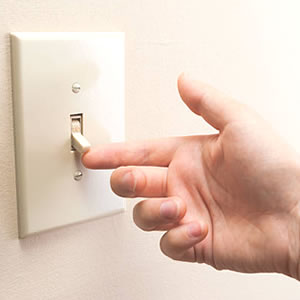
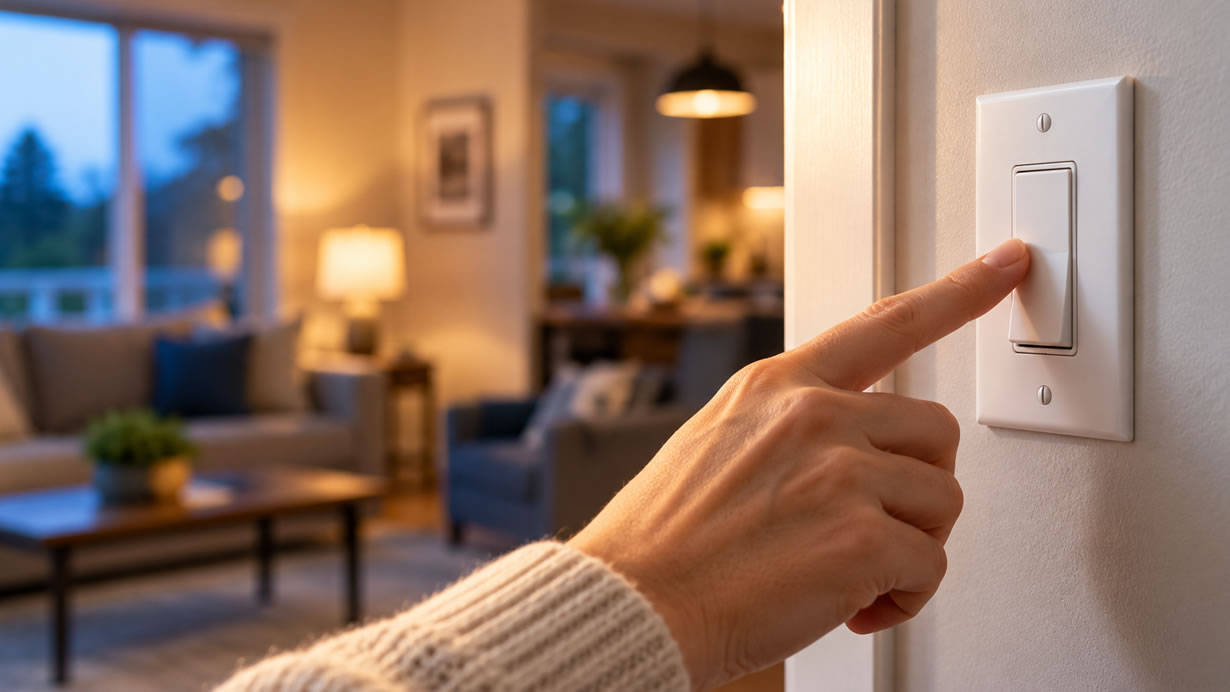
Flip a switch. The light comes on. No delay, no warm-up, no waiting. It’s so instant that it feels like the electricity was just… there. Sitting in the wire. Ready.
It wasn’t.
Here’s the part almost nobody stops to think about: the electricity in that bulb didn’t exist a few seconds ago. It was generated somewhere across the state, traveled to your home, and got used — all in the time it took you to move your finger. There was no reservoir of electricity waiting in your walls. It was made on demand, for you, right then.
That one fact quietly explains more about how the whole electricity system works than almost anything else.
The Tank That Isn’t There
Think about how most things in your home actually work.
Water sits in pipes and tanks until you turn the faucet. Natural gas waits in a line until the burner clicks on. The food in your fridge was bought days ago and stored until dinner. Almost everything we use runs on the same quiet logic: make it or buy it ahead of time, keep it somewhere, use it later.
Electricity breaks that pattern completely.
There’s no big tank of electricity behind your house. There’s no warehouse where the power company keeps a month’s supply on the shelf. At the scale a city runs on, electricity can’t really be stored that way. What you use has to be generated at almost the exact moment you use it — and the instant you stop, that generation adjusts too.
So when you flip the switch, you’re not drawing down a stockpile. You’re placing an order that gets filled the same second.
Electricity Is Flow, Not Storage
Here’s the single concept worth walking away with: electricity is flow, not storage.
Water can sit still in a tank. Electricity, at grid scale, mostly can’t. It’s less like a thing you keep and more like a current that has to keep moving — generated, delivered, and used in a continuous stream, in real time.
That’s why “generating electricity” isn’t something that happens once and gets banked. It’s happening constantly, right now, matched as closely as possible to exactly how much everyone is using at this exact moment. When more people turn things on — a hot afternoon, everyone’s air conditioning running — more gets generated to meet it. When demand drops overnight, generation eases off too.
The system isn’t storing and dispensing. It’s balancing. Every second, all day, the amount being made is kept in step with the amount being used. Nobody sees it happening. It just quietly works, which is exactly why the light comes on the instant you ask for it.
You don’t need to manage any of this. It’s not a decision you make or a setting you adjust. It’s simply the nature of what electricity is — and once you can see it, the rest of the system starts to make a lot more sense.
Go Back to That Light Switch
When you flip it, you’re not tapping a battery in the wall. You’re reaching all the way back to a turbine spinning somewhere in the state — and asking it, in effect, to make a little more, right now, for you. The switch is the near end of a line that runs all the way to the source, and the whole length of that line is moving in real time.
That’s why a power outage feels so total and so sudden. There’s no reserve tank in the basement to coast on. When the flow stops, it stops — because the flow was the electricity. There was never a stored supply sitting in your house to fall back on.
The instant light isn’t a small convenience. It’s the visible tip of an enormous system working to keep supply and demand matched every moment of every day. The magic isn’t that the power was waiting. It’s that it wasn’t — and it showed up anyway, exactly when you needed it.
A Door, If You Want to Walk Through It
Most of us will never think about this again after today, and that’s fine. The lights will keep coming on whether we understand them or not.
But if this shifted something — if “the electricity was made a second ago” landed as a small surprise — that’s the thread worth pulling. Because once you see electricity as a flow instead of a stored thing, questions that used to feel abstract start to feel concrete: where is it being made, what’s it being made from, and what does that mean for the air, the bill, and everything downstream.
No rush, and nothing to do about it today. Just an open door.
Questions People Ask
Why do my lights turn on instantly when I flip the switch? Because the electricity is generated the moment you need it and travels to your home almost instantly. There’s no delay because there’s nothing to retrieve from storage — it’s made and delivered in real time.
Is electricity stored somewhere in my house? No. At the scale a home runs on, electricity isn’t kept in a tank or battery in your walls. What you use is produced the instant you use it, which is why the light comes on with no wait.
Why does a power outage happen so suddenly? Because there’s no stored reserve in your home to coast on. Electricity is a continuous flow, so when that flow stops, the power stops right away — there’s no backup supply sitting in the house.
Where does the electricity go when I turn everything off? The system simply generates a little less. Because supply is matched to demand in real time, the moment you stop using power, generation eases off to match.
How is electricity made in the first place? Most electricity comes from spinning a turbine — driven by steam, wind, or water — which turns motion into electrical current that flows to your home.
Want the full picture of how that flow gets to you — from the spinning turbine to the meter on your wall? Start with Electricity & Everyday Life, the plain-language walkthrough of the whole system.
Keep going: You Don’t Get Power From One Plant. You Get It From All of Them. and Why Your Bill Shows What Electricity Costs, But Not Where It Came From.

Author: CEL Editorial Team
The CEL Editorial Team turns complex energy topics into clear, practical stories—grounded in public data, credible sources, and a New York perspective.