
Key Takeaways
- The Grid is a Shared Pool: Your home isn’t plugged into a single power plant; it’s plugged into a massive regional network where all sources—gas, nuclear, and renewables—pool their energy together.
- Dynamic Energy Mix: The specific blend of power you use changes by the hour based on weather conditions, time of day, and total demand across the state.
- Identity of a Watt: A watt generated by a wind turbine is physically identical to a watt from a gas plant once it reaches your outlet; the difference is entirely in the upstream impact.
- System Thinking: To understand where your power comes from, you have to look at the regional system as a whole rather than looking for a single direct line to a local facility.
Quick answer: The electricity in your home doesn’t come from one specific power plant. It comes from a shared grid fed by many sources at once — gas, hydro, nuclear, wind, solar — blended together and shifting by the hour. You use whatever the whole system is producing at that moment, not the output of any single plant you could point to.
Ask someone where their electricity comes from, and if they have an answer at all, it’s usually a specific one. “There’s a plant off the highway — probably that one.” “We’re near the river, so hydro, I’d guess.” It feels like there should be a source. A place. The one that powers your house.
There isn’t. Or rather — there is, and it’s all of them at once.
The Question With No Single Answer
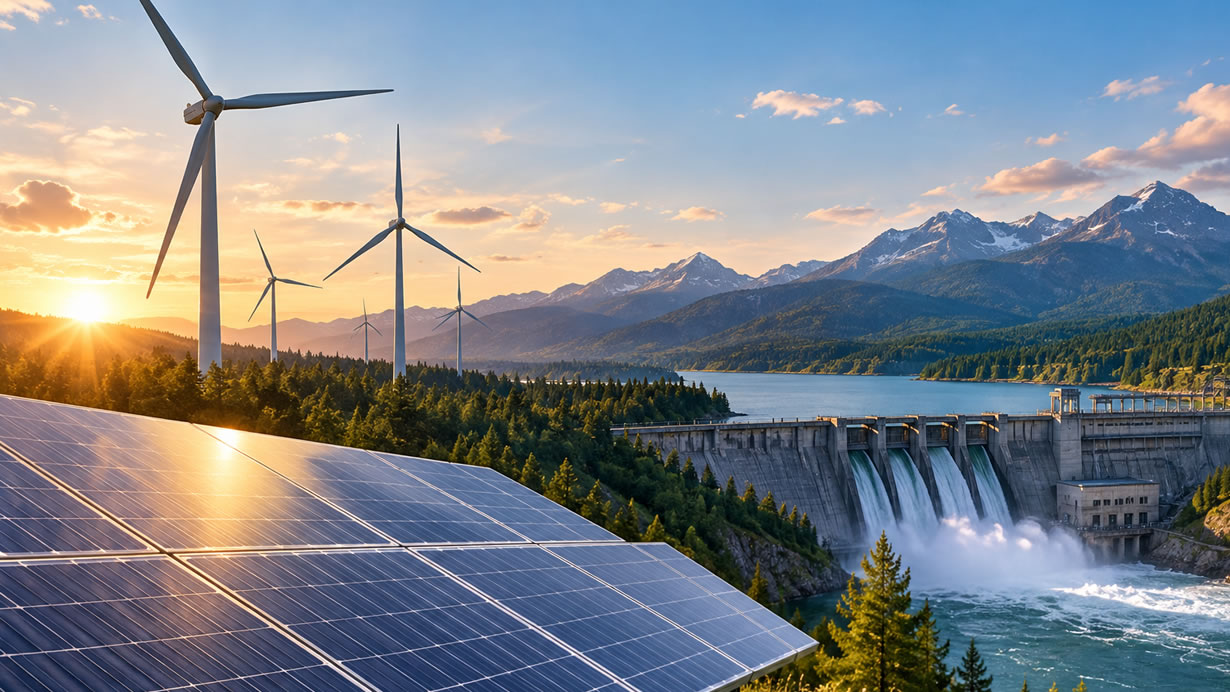
Picture the moment you’re using electricity right now to read this. Somewhere, a natural gas plant is running. So is a hydroelectric dam. A nuclear station is humming along at steady output. If the wind’s blowing, turbines are turning; if the sun’s up, panels are feeding in too.
All of that electricity goes to the same place first: the grid. Not your grid or your neighbor’s grid — the grid, one shared network that ties the whole state’s power together. Every plant pours its output into that common pool, and every home draws from it.
So the electrons lighting your kitchen didn’t make a private trip from one plant to your address. They came out of a shared pool that dozens of sources are filling at the same time. Asking which plant powered your specific light is a little like asking which raindrop filled your glass from a river. The question assumes a separateness that isn’t there.
You Use a System, Not a Plant
Here’s the concept worth keeping: you consume a system, not a single source.
The grid works like one enormous shared reservoir. Many sources feed into it continuously — some steady, some coming and going with the weather — and everyone connected draws from the same blended supply. What you actually use at any given second is the mix of everything flowing in right then.
And that mix is never sitting still. On a windy spring afternoon, wind might be carrying a big share. On a still, scorching August day with every air conditioner in the state running, gas plants often ramp up to meet the surge. Overnight, when demand falls, the blend shifts again. The exact recipe of what’s powering your home changes throughout the day, quietly, without anything changing on your end.
You never notice, because electricity from any source looks identical once it reaches you. A watt from a wind turbine and a watt from a gas plant light the same bulb the same way. The difference is entirely upstream — in what’s feeding the pool — not in what comes out of your outlet.
The River and the Glass
Go back to that glass of water from the river.
You can’t point to the drop that filled it. But you can ask a bigger, more useful question: what’s flowing into the river upstream? Because whatever’s up there — clean springs, runoff, whatever mix of sources feeds it — is what ends up in your glass.
Electricity is the same. You can’t trace your specific light to one plant. But you can look at what’s feeding the shared pool your home draws from — and that mix is real, it’s local, and it’s made up of actual places you can find on a map. Gas plants, dams, wind and solar sites, nuclear stations, scattered across New York, each one pouring into the same system you’re plugged into right now.
That’s the shift: your power isn’t a line from one plant to your house. It’s your share of a whole state’s worth of generation, blended and delivered in real time. The single-plant picture was never the real one — the system was.
A Door, If You Want to Walk Through It
You don’t have to know the mix to use the lights. It’ll keep flowing whether you ever look or not.
But if you’re curious what’s actually feeding the pool near you — which real plants, which sources, in which parts of the state — that’s something you can genuinely go look at now. The mix stops being an abstraction the moment it becomes a set of places with names and locations.
No pressure, nothing to decide. Just a map worth glancing at, if you’re the kind of person who likes knowing what’s really going on behind the wall.
Questions People Ask
Where does my electricity actually come from? From a shared grid fed by many power plants at once — gas, hydro, nuclear, wind, and solar. You use a blend of whatever is flowing into the system at that moment, not the output of one specific plant.
Does my electricity come from the power plant closest to me? Not specifically. Every plant feeds into the same shared grid, and your home draws from that common pool. The nearest plant contributes to the mix, and it isn’t the sole source of your power.
Does the source of my electricity change during the day? Yes. The mix shifts constantly — more wind on a windy day, more gas on a hot afternoon when demand peaks, a different blend overnight. What’s powering your home changes throughout the day without anything changing on your end.
Can I tell how my electricity was made just by looking at it? No. Electricity from a wind turbine and electricity from a gas plant are identical once they reach your outlet. The difference is entirely in what’s feeding the grid, not in what comes out of the wall.
How can I find out what power plants feed my area? The plants feeding the grid are real places you can look up. Directories that map generation sites across New York show which plants and which sources feed the system near you.
Curious what’s actually feeding the grid near you? Our energy profiles map real generation sites across New York — gas, renewable, nuclear, and more — so the “mix” becomes places you can actually look up. Start from the top with Electricity & Everyday Life, or keep going with Why Your Bill Shows What Electricity Costs, But Not Where It Came From.

Author: CEL Editorial Team
The CEL Editorial Team turns complex energy topics into clear, practical stories—grounded in public data, credible sources, and a New York perspective.