

Key Takeaways
- The bill is an invoice, not a disclosure: Just like a grocery receipt shows cost rather than farm location, your electric bill tracks financial liability and usage, not the physical source of the electrons.
- Standard charges are broken into four buckets: Supply (energy and capacity), Delivery (local infrastructure), Public Benefit (state programs), and Taxes.
- Supply is a bundle: The “supply charge” covers more than just raw energy; it includes peak demand capacity and the cost of energy lost during transmission.
- Sourcing requires external data: To find out if your power comes from wind, gas, or nuclear plants, you must look at environmental disclosure labels or supplier profiles, as this data is not required for billing purposes.
Quick answer: Your electric bill is built to answer one question — how much you owe — and it answers it in detail. What it doesn’t include is where your electricity was generated or what it took to make it. That’s simply what a bill is for: it tracks cost, and the source lives somewhere else.
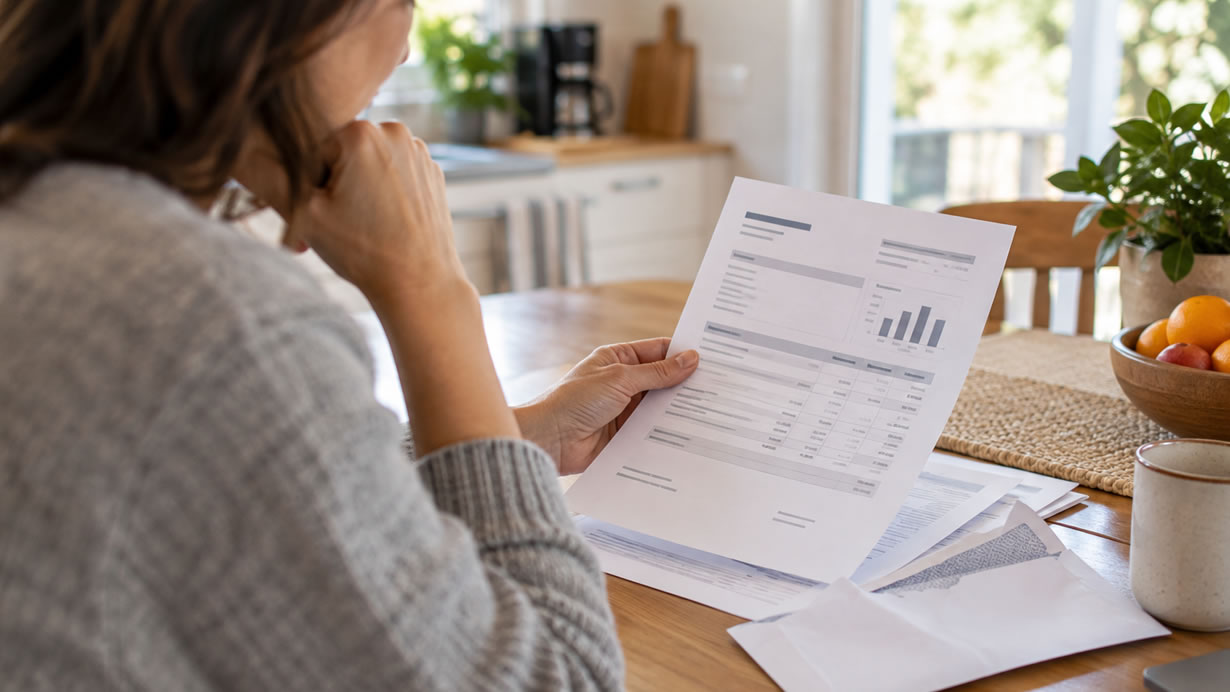
Once a month it arrives. Paper in the mailbox or a subject line in your inbox: your electric bill. You glance at the number, maybe pay it without much thought. For most people, this is the one moment the entire electricity system becomes something you actually hold in your hands.
And it’s interesting, when you look closely, how much the bill tells you — and how much sits outside what it’s designed to cover.
What a Bill Is Built to Do
Look closely and a bill is genuinely informative about one thing: cost.
It starts with how much electricity you used, measured in kilowatt-hours — the meter reading turned into a number. From there, most New York bills break the cost into a handful of top-line pieces.
The first is the supply charge — the cost of the electricity itself. It’s worth knowing that supply is more layered than it looks. The raw energy is actually a relatively small piece; the supply charge also folds in things like the capacity to have enough power available when demand peaks, and the losses that naturally occur as electricity travels. You don’t need to track each of those to read your bill, and the takeaway is simply that “supply” is a bundle, not a single flat cost. In New York, you might buy your supply from your utility or from a separate independent supplier, which is why it sometimes appears as its own line with its own rate.
The second is the delivery charge — the cost of actually getting that electricity to you. This covers the wires, poles, transformers, and local infrastructure your utility maintains to carry power the last stretch into your home. Even when your supply comes from another company, delivery almost always stays with your local utility, because they own the physical lines to your house.
The third is the public benefit charge. In New York this now appears as its own separate line, and it’s the one most people have paid for years without knowing what it was. It funds statewide energy programs — things like efficiency initiatives, renewable energy development, and bill assistance for households that need help. It’s small on any single bill, and it’s worth recognizing when you see it.
And finally there are taxes and surcharges — state and local amounts applied on top of the rest.
Every one of those pieces traces back to something real and measurable.
So the bill does its job well. Its job is to explain what you owe and why, in dollars, and on that question it’s thorough.
A different question sits outside its frame. Where was this electricity made? What was spun, burned, or split to produce it — a gas plant, a dam, a wind field, a nuclear station? A bill isn’t built to answer that. It’s an account of cost, and the source is a different kind of information.
A Bill Tracks Cost, and the Source Lives Elsewhere
Here’s the idea worth holding onto: a bill tracks cost, and where your electricity comes from lives somewhere else entirely.
Cost is dollars — clean, countable, printed in a column. The source is a different layer: where the electricity was generated, what mix of plants fed the grid that month, how that connects to the air or to a household’s carbon footprint. All of it is real, and none of it is the kind of thing a dollar amount is built to hold.
This works the way a grocery receipt does. A receipt tells you what you spent, and it doesn’t tell you which farm grew the tomatoes or how they were grown. That’s not the receipt falling short — it’s simply not what a receipt is for. The bill is the same: an invoice that settles an account, doing exactly what an invoice does.
And so the source of your electricity can stay unfamiliar for years, quietly, without anything being wrong. Many households don’t know where their power comes from yet — and that makes complete sense, because the document they see every month was never the place that information lived.
Years of Bills, One Missing Detail
Think about what that adds up to.
You’ve probably looked at hundreds of electric bills. Each one explained what you used and what it cost. The source of that electricity wasn’t part of the picture — not because it was tucked into fine print, and simply because a bill isn’t where the source shows up.
That’s the quiet part worth noticing. Understanding your electricity fully has always taken one piece the bill doesn’t carry: where it actually came from. The bill made the cost easy to see, and it left the source for somewhere else — which is how electricity can power a whole life while where it comes from stays genuinely interesting to go find out.
A Door, If You Want to Walk Through It
You can keep reading the bill exactly as you always have. Nothing here changes what you owe or asks you to do anything differently.
And if you’ve ever been a little curious where your electricity actually comes from — the part the bill was never built to show — that’s something you can go look at whenever you like. The cost lives on the bill. The source lives somewhere else, and it’s open to anyone who wants to see it.
Questions People Ask
What are the charges on my electric bill? Most New York bills have a few top-line pieces: a supply charge for the electricity itself, a delivery charge for getting it to your home, a public benefit charge that funds statewide energy programs, and taxes and surcharges on top.
What’s the difference between the supply charge and the delivery charge? The supply charge covers the electricity itself. The delivery charge covers moving it to you — the wires, poles, and local infrastructure your utility maintains. In New York, supply can come from a separate company, while delivery almost always stays with your local utility.
What is the public benefit charge on a New York electric bill? It’s a separate line that funds statewide energy programs — things like efficiency initiatives, renewable energy development, and bill assistance for households that need help. It’s small on any single bill, and many people have paid it for years without knowing what it was.
Why doesn’t my electric bill say where my electricity comes from? Because a bill is built to track cost, not source. It’s an invoice — it explains what you owe and why, the same way a grocery receipt shows what you spent without saying which farm grew the food.
Why does my supply charge seem to include more than just the electricity? Because supply is a bundle. The raw energy is a relatively small piece; the supply charge also folds in things like having enough capacity available at peak demand and the losses that occur as electricity travels.
Curious about the part the bill doesn’t cover — where your power actually comes from? Start with Electricity & Everyday Life for the full walkthrough, or look up real generation sites near you in the energy profiles. Related: Why Your Lights Turn On the Instant You Flip the Switch and You Don’t Get Power From One Plant. You Get It From All of Them.

Author: CEL Editorial Team
The CEL Editorial Team turns complex energy topics into clear, practical stories—grounded in public data, credible sources, and a New York perspective.