

Key Takeaways
- Source Over Habit: The energy source (grid mix and heating fuel) determines the vast majority of a home’s carbon footprint, often overshadowing individual daily habits.
- Baseline vs. Margin: Habits like recycling or thermostat discipline adjust a footprint at the margins, while the energy source sets the baseline that habits build upon.
- Systemic Baseline: Most households inherit their energy baseline through regional grid infrastructure and home construction, rather than individual lifestyle choices.
- The Power of the Source: Changing an energy source (e.g., switching to heat pumps or renewable energy) acts as a powerful lever that shifts the entire baseline without requiring behavior changes.
Quick answer: Two households can live almost identically — same size home, same driving, same daily routines — and still have very different carbon footprints. The difference often isn’t effort or discipline. It’s where each home’s energy comes from. The source does more of the work than the habits do.
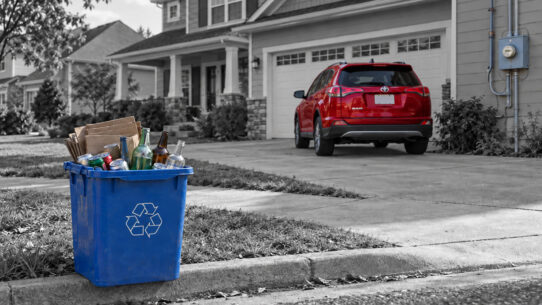
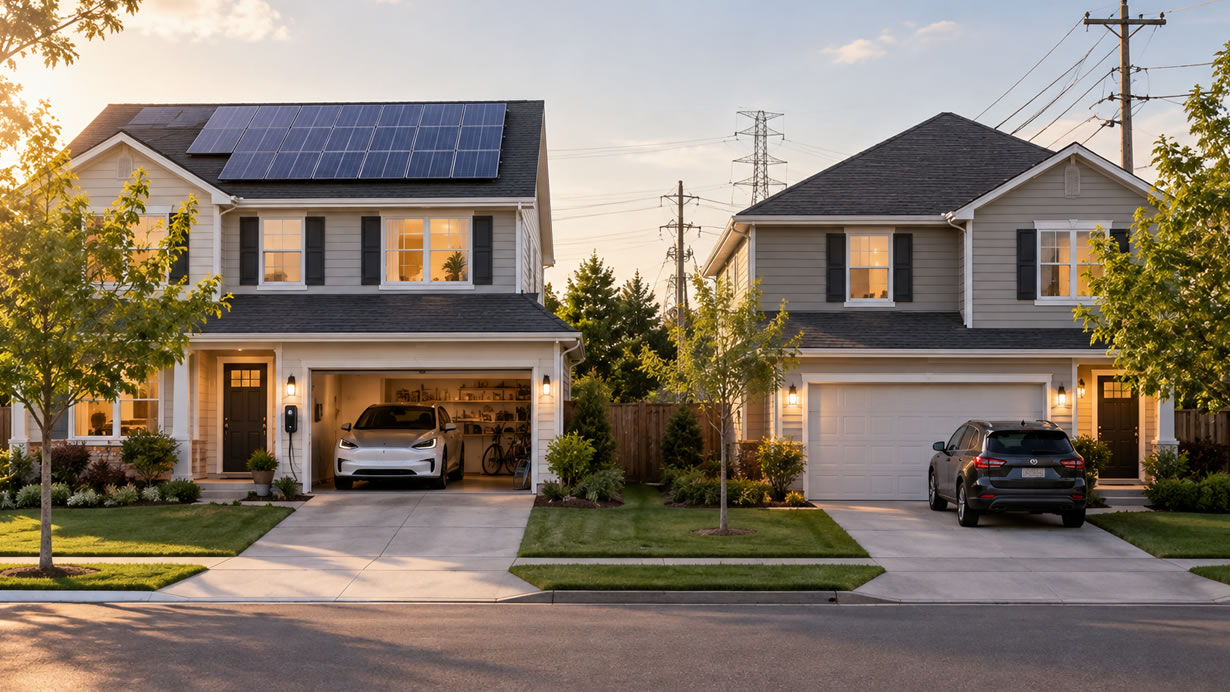
Imagine two houses on the same street. Same size, same number of people, same thermostat settings. Both families drive similar cars similar distances. Both run the dishwasher at night, keep the lights off when they leave a room, recycle what they can. On paper, their daily habits are nearly a perfect match.
And one household’s carbon footprint could be noticeably lighter than the other’s. Not because they try harder. Because of something neither family thinks about much at all.
Same Routine, Different Result
It’s a strange idea at first. We tend to assume a footprint is mostly a reflection of behavior — that a lighter footprint means someone is doing more, cutting more, being more careful. So when two nearly identical households land in different places, the instinct is to look for the hidden effort. Who’s taking shorter showers? Who unplugs more? Who’s the more disciplined recycler?
Usually, that’s not where the gap comes from. Two homes with matching habits can separate by a wide margin for a reason that has nothing to do with discipline: what’s actually generating their electricity, and what’s heating their homes.
One house might draw from a grid mix that leans heavier on cleaner generation, or heat with a lower-emission system. The other might sit on a dirtier mix, or heat with a fuel that carries more emissions per unit of warmth. Neither family chose their daily routine to create that gap. The gap was mostly set upstream, before either of them flipped a single switch.
The Source Sets the Baseline
Here’s the concept worth holding onto: the source of a home’s energy sets the baseline, and habits adjust from there.
Picture two identical cars. Same make, same weight, same driver being equally careful. Fill one with a cleaner-burning fuel and one with a dirtier one, and they’ll produce different emissions over the same trip — not because of how they’re driven, but because of what’s in the tank. The driving habits are identical. The fuel isn’t.
A home works much the same way. The daily habits — lights, laundry, thermostat discipline — are the driving. The energy source is what’s in the tank. You can be an equally careful “driver” as your neighbor and still land in a different place, because the baseline was set by the source long before your habits entered the picture.
This is what makes the source such a powerful lever. Habits move a footprint at the margins, a few percent here and there. The source moves the baseline the habits are adjusting from. Change what’s in the tank, and every mile after that is different — no change in how carefully you drive required.
It also takes a lot of pressure off the habits. If your footprint is heavier than your neighbor’s, it may not mean you’re doing anything wrong. It may simply mean your home sits on a different source, through no fault of your routine.
What Sets the Source in the First Place
It’s worth naming what actually decides a home’s energy source, because for most people it was never a deliberate choice. Part of it is the regional grid mix — the blend of gas, hydro, nuclear, wind, and solar feeding a given area, which varies from place to place. Part of it is how the home happens to be heated, often decided by whoever built it or last renovated it. And part of it is timing and geography — which plants sit nearby, which fuels are common in that region. A household inherits most of this. That’s not a failing. It’s simply the starting point — and the starting point is exactly what the source lever can move.
The Streetlight Version
So picture the two houses one more time.
From the sidewalk, they look like a story about willpower — one family must be greener, more careful, more committed. But the real story is mostly invisible from the street. It’s in the wires running to each house and the fuel feeding each furnace. The families are living nearly the same life. The energy behind that life is what’s different.
That reframes the whole idea of a footprint. It’s not primarily a scorecard of who tries hardest. It’s, first and foremost, a reflection of source — what’s powering the home before anyone in it does a single conscious thing. The habits matter, and they sit on top of a baseline that was set somewhere upstream.
Which means the most powerful question isn’t “how can I be more disciplined than my neighbor.” It’s “what’s actually powering my home, and what would it take to change that.” One is a matter of effort. The other is a matter of source — and the source is where the real difference lives.
A Door, If You Want to Walk Through It
You can keep every good habit you already have. Nothing here asks you to drop a single one.
And if the idea that your neighbor’s lighter footprint might come down to source rather than effort landed as a small surprise, that’s the thread worth pulling. Because it points somewhere more useful than comparing routines: toward understanding what’s actually feeding your own home, and what moving that source would really mean.
No rush, and no verdict on anyone’s habits. Just a clearer sense of where the biggest difference actually comes from.
Questions People Ask
Why do two similar homes have different carbon footprints? Because a footprint depends heavily on where each home’s energy comes from, not just on daily habits. Two households with matching routines can differ based on their grid mix and how each home is heated.
Does my carbon footprint depend more on my habits or my energy source? The source usually does more of the work. Habits adjust a footprint at the margins, while the energy powering the home sets the baseline everything else builds on.
If my footprint is higher than my neighbor’s, am I doing something wrong? Not necessarily. It may simply mean your home sits on a different energy source, through no fault of your routine. A footprint isn’t a scorecard of who tries hardest.
What decides where a home’s energy comes from? Mostly things a household inherits — the regional grid mix, how the home was built or last renovated to heat itself, and which plants and fuels are common in the area. For most people it was never a deliberate choice.
Can changing my energy source lower my footprint more than changing habits? Often, yes. Because the source sets the baseline, moving it can shift a footprint more than adjusting daily habits — without any change in how carefully you live day to day.
Want the full picture of what shapes a household’s footprint — and why the source matters most? Start with Carbon Footprint, Simplified and Reclaimed.
Related: The Straw, the Toaster, and the Thing Nobody Mentions and The Carbon Finger Almost Everyone Overrates.

Author: CEL Editorial Team
The CEL Editorial Team turns complex energy topics into clear, practical stories—grounded in public data, credible sources, and a New York perspective.