


Key Takeaways
- Beyond the Lungs: While air pollution enters through the respiratory system, fine particles can pass into the bloodstream, affecting the entire body.
- Cardiovascular Impact: Research consistently links air pollution to heart strain and blood vessel inflammation, not just breathing issues.
- Vulnerable Groups: Children, older adults, and those with pre-existing conditions are most sensitive to changes in air quality.
- Community Consequences: The impact of poor air extends to daily life, leading to more doctor visits, school absences, and lower work productivity.
- The Energy Link: Air quality is directly influenced by how electricity is generated, particularly at power plants where fuels are burned.
Quick answer: Most people connect air pollution to breathing — and its effects reach further than that. Fine particles small enough to enter the bloodstream can also strain the heart, and the wider consequences show up in everyday places: more health care visits, more missed school and work days. The effects are broader than the lungs alone.
Ask someone what air pollution does to the body, and the answer is almost always about breathing. Coughing. Asthma. Trouble catching your breath on a bad-air day. And that’s a real part of it — the lungs are where polluted air makes first contact, so it makes sense they come to mind first.
The part that surprises people is how much further the effects can travel, both inside the body and out into everyday life.
The Lungs Are the Front Door, Not the Whole House
It’s true that the respiratory system takes the first hit. Because polluted air is breathed in, the lungs and airways are the first place it lands — which is why irritation, inflammation, and worsened symptoms for people with conditions like asthma are the effects most people know about. On a high-pollution day, that’s the layer you can feel.
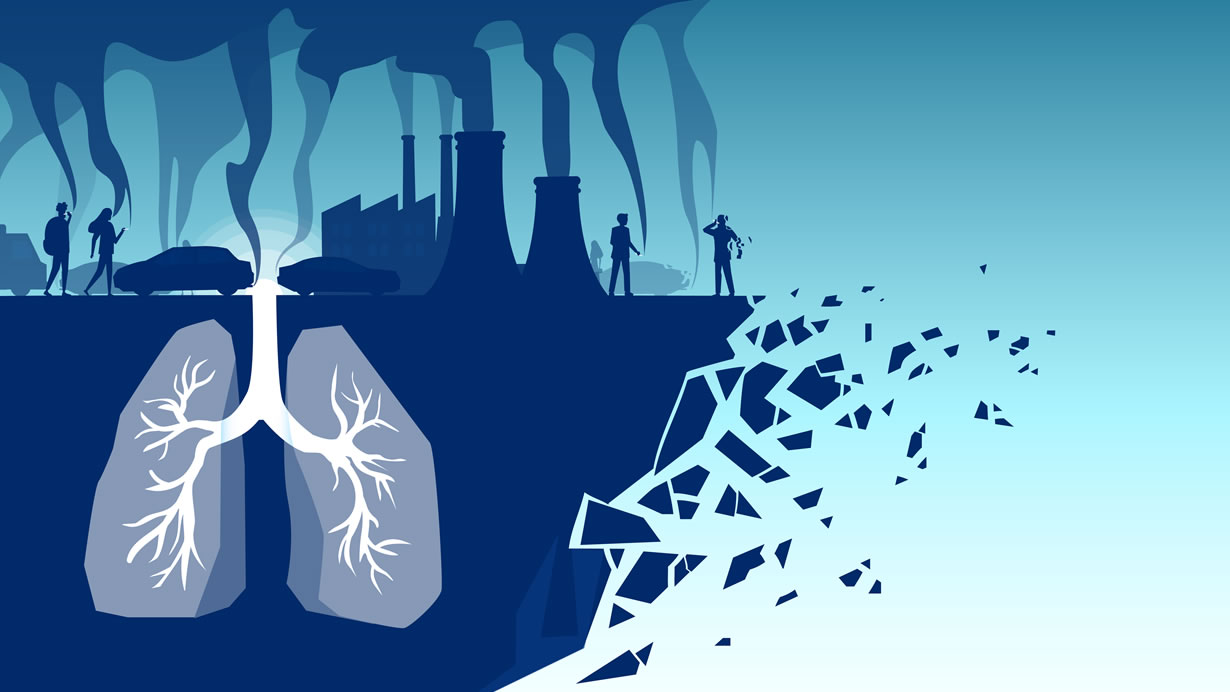
The lungs, though, are more like the front door than the whole house. Some pollutants don’t just stay in the airways. The finest particles — the ones small enough to be breathed deep into the lungs — can be small enough to pass from the lungs into the bloodstream. And once something is in the bloodstream, it can reach well beyond where it entered.
That’s the piece the “air pollution equals lung stuff” picture leaves out. The front door is where it comes in. It doesn’t necessarily stay there.
Fine Particles Can Reach the Heart, Not Just the Lungs
Here’s the concept worth holding onto: the finest airborne particles can affect the cardiovascular system — the heart and blood vessels — not only the respiratory system.
Once those tiny particles cross from the lungs into the bloodstream, they’re circulating through the same system that serves the heart. Over time, that added burden is associated with strain on the cardiovascular system. It’s one of the effects most consistently documented in public health research — pollution as a factor not only in breathing problems, but in heart-related strain as well.
Think of the body’s air handling a little like a home’s. The lungs are the intake vents, where outside air comes in. And the air doesn’t stop at the vents — it circulates through the whole house. If something fine enough gets past the intake, it travels everywhere the air goes. The body works similarly: what makes it past the lungs into the blood can travel with that blood throughout the body, which is why the effects aren’t confined to the place the air entered.
This is why the health picture around air pollution is broader than a single system. It starts at the lungs, and it doesn’t end there — a point worth understanding calmly, not as alarm, and simply as a more complete picture of what the research describes.
Who Feels It Most
The effects also land unevenly, and it’s worth naming who tends to feel them more. Children are one group, because their lungs and bodies are still developing and they often breathe faster relative to their size. Older adults are another, along with anyone already living with a respiratory or cardiovascular condition. This isn’t unique to pollution from electricity — it holds for air pollution from any source. The point is simply that the same air can affect two people quite differently, and the ones most sensitive to it are often the least able to avoid it.
Where the Effects Actually Show Up
Now step back from the body and look at ordinary life, because that’s where these effects become visible in a different way.
When air quality is poor over a stretch of time, the consequences don’t stay abstract. Communities with higher pollution levels tend to see more visits to doctors and hospitals for breathing and heart-related symptoms. Poor-air days are linked to more school absences, as children with sensitive lungs stay home. Work productivity can dip when people feel the effects. None of that appears on an electric bill or in a headline — it shows up quietly, in appointments, absences, and off days scattered across a community.
And here’s the connection that ties it back: some of that air quality traces to how electricity is generated, at the plants where fuel is burned. The missed school day and the power plant can feel like they belong to completely separate worlds. They’re quietly linked through the air in between.
That’s the fuller shape of it. Air pollution isn’t only a breath you notice on a bad day. It reaches into the body past the lungs, and out into daily life past the individual — into the ordinary rhythms of school, work, and health that a community shares.
A Door, If You Want to Walk Through It
Nothing here is meant to worry you or to hand you a task. It’s simply a more complete picture than the usual one.
And if it reframed something to see air pollution as broader than breathing — reaching the heart inside the body, and everyday life outside it — that’s the thread worth following. Because it connects back to something concrete: the air a community shares is shaped in part by how the electricity around it is made. Understanding that link is its own kind of clarity.
No rush, and no alarm. Just a fuller sense of what the air actually touches.
Questions People Ask
Does air pollution only affect the lungs? No. The lungs are where polluted air makes first contact, and the effects can reach further. The finest particles can pass into the bloodstream and affect the cardiovascular system too.
Can air pollution affect the heart? Yes. Fine particles small enough to enter the bloodstream can add strain on the heart and blood vessels over time. It’s one of the effects most consistently documented in public health research.
Who is most affected by air pollution? Children, older adults, and people with existing respiratory or cardiovascular conditions tend to be more sensitive. The same air can affect two people quite differently, and this holds for air pollution from any source.
How does air pollution affect everyday life beyond health symptoms? Poor air quality is linked to more doctor and hospital visits, more school absences, and dips in work productivity. These effects show up quietly across a community rather than on any single bill.
How is air pollution connected to how electricity is made? Some air quality traces back to power plants where fuel is burned to generate electricity. The air a community breathes is shaped in part by how the power around it is produced.
Note: This covers a health-related topic in general, educational terms. It isn’t medical guidance. Anyone with specific health concerns is best served by a qualified professional.
Want the full picture of how electricity generation connects to air and health? Start with Air Pollution and Health.
Related: The Pollution Happens at the Plant, Not at Your Outlet and Why a Hot Summer Afternoon Can Change the Air You Breathe.

Author: CEL Editorial Team
The CEL Editorial Team turns complex energy topics into clear, practical stories—grounded in public data, credible sources, and a New York perspective.